
Guide · Singapore homes
Humidity and indoor air in Singapore homes
Why homes here stay damp, what a comfortable indoor range looks like, and when a dehumidifier, air purifier or hygrometer helps, and when the real fix is care.
No credit card needed.
Why Singapore homes stay humid
Singapore's outdoor air is humid all year. Relative humidity often sits above 90% in the early morning and falls to around 60–70% on a sunny afternoon, according to the Meteorological Service Singapore.
Indoors, that moisture is joined by cooking, showers, drying laundry and breathing. Rooms with closed windows, little cross-ventilation or an aircon that switches off at night tend to hold it longest.
What is a comfortable indoor humidity?
A range of roughly 40–60% relative humidity is widely used as a comfortable indoor target. Health and building agencies such as the US EPA advise keeping indoor humidity below 60% to limit mould growth.
In Singapore, many homes sit above that for long stretches. A single reading matters less than how many hours a room stays damp.
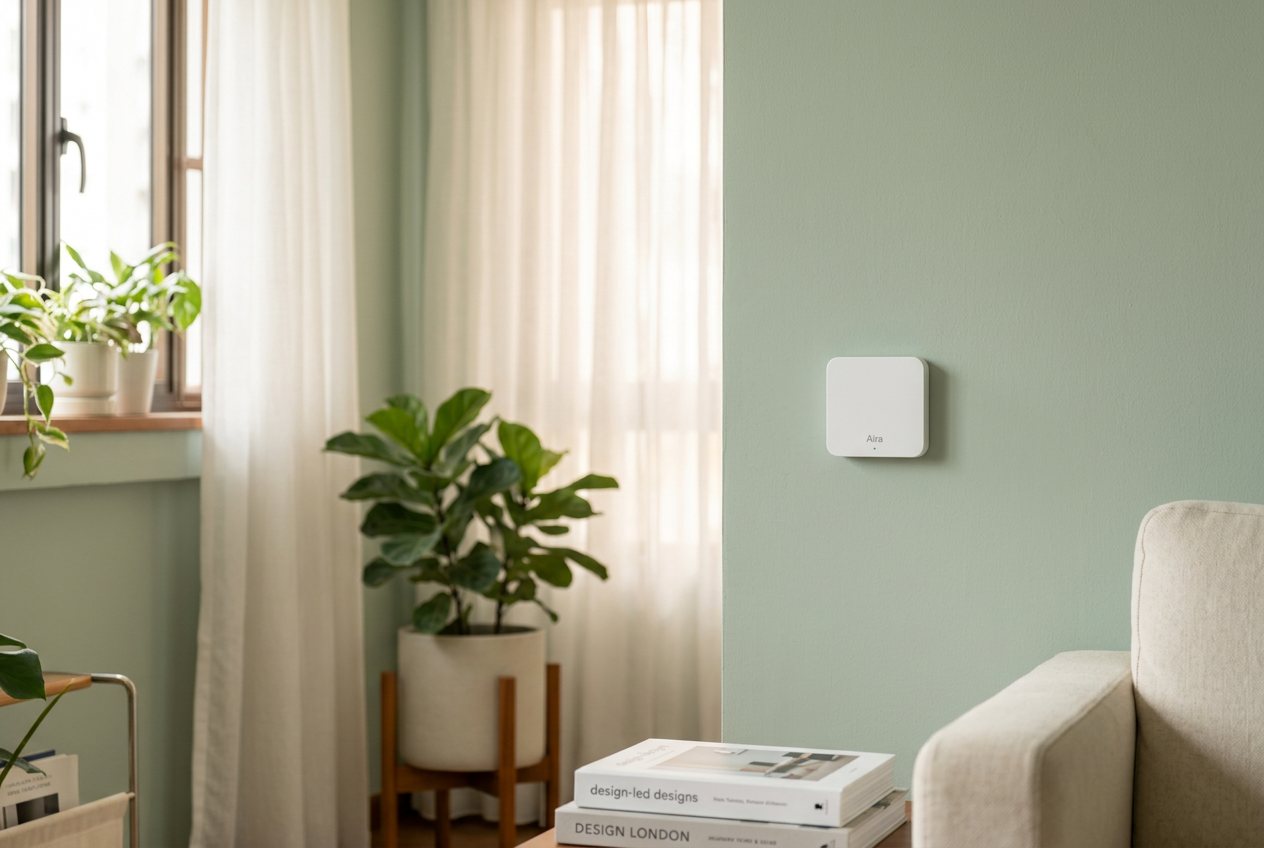
A meter shows a number. Aira Sense reads your whole home and tells you what to do next. See Aira Sense
How to reduce humidity in a room
Let air move: open windows on opposite sides when outdoor air is drier, and run exhaust fans while cooking and showering.
Dry laundry outside or in a ventilated space, keep wardrobes slightly open, and leave a gap between furniture and outer walls.
Keep the aircon clean. A clogged coil and drain pan cool the room but remove less moisture, and can hold damp residue of their own.
Dehumidifier, air purifier or hygrometer?
A hygrometer or humidity meter shows one number for one spot. It tells you the humidity, but not why or what to do.
A dehumidifier pulls water from the air in a closed room. It helps a damp storeroom or bedroom, but it does not fix poor airflow, a leak or a dirty aircon.
An air purifier filters particles. It does not lower humidity.
A meter shows a number. Aira Sense reads your whole home and tells you what to do next. See Aira Sense
What affects indoor air quality at home
Humidity, stale air in closed rooms, dust and fine particles, and odours or fumes from new furniture, paint and cleaning products all shape how a room's air feels.
Outdoor conditions matter too: haze days and Singapore's PSI change what comes in when windows open.
When the fix is care, not another device
If damp keeps coming back, the cause is usually airflow, an aircon that needs servicing, or moisture already in walls and fabrics.
That is where aircon care, mould care and mattress or fabric cleaning help more than another gadget.
A meter shows a number. Aira Sense reads your whole home and tells you what to do next. See Aira Sense
Questions
Humidity and air, answered
What is the ideal humidity for a Singapore home?
Roughly 40–60% relative humidity is a widely used comfortable range, and agencies such as the US EPA advise keeping indoor humidity below 60% to limit mould. Many Singapore homes run higher, so how long a room stays damp matters more than one reading.
Do I need a dehumidifier in Singapore?
A dehumidifier helps a closed, damp room such as a storeroom or bedroom. If damp keeps returning, it is worth checking airflow, the aircon and any moisture in walls first, because a dehumidifier treats the air, not the cause.
Is a hygrometer enough to know if my home is too humid?
A hygrometer shows the humidity at one spot and one moment. It is a useful start, but it does not show patterns over days, compare rooms or tell you what care is needed.
Does an air purifier reduce humidity?
No. An air purifier filters particles from the air. It does not remove moisture. For damp, airflow, aircon care or a dehumidifier are the tools.
How can I improve indoor air quality at home?
Ventilate when outdoor air is good, run exhaust fans, keep the aircon clean, reduce heavy fragrances and dust with capture-first cleaning. Aira Sense can show which of these your home needs most.
How is Aira Sense different from a humidity meter or air quality monitor?
A meter shows numbers. Aira Sense reads your home over time alongside outdoor conditions and your home's profile, and Aira AI explains what care is due next. It does not diagnose health conditions or book anything without you.
Want to know what your own home is doing?
Aira Sense reads your home, and Aira AI tells you what care it needs next.
No credit card needed.